


Your Guide to Flooring Pricing: How Material Quality and Installation Services Influence Costs in GTA
Flooring pricing covers material costs, installation labor, subfloor preparation, and project overheads—understanding how these elements interact helps homeowners and commercial clients estimate total investment accurately.
This guide explains the mechanics behind pricing in the Greater Toronto Area (GTA) and Vaughan, shows typical local price ranges, and highlights how choices in material quality and installation services affect lifecycle cost and performance. Many readers need clear comparisons between hardwood, vinyl, laminate, engineered, carpet, and tile, plus practical ways to reduce surprises during a remodel; this article delivers those comparisons and actionable budgeting guidance. You will find featured-snippet style answers for common questions, side-by-side tables to compare per-square-foot costs, lists of hidden expenses to plan for, and decision checklists that simplify DIY versus professional tradeoffs. We also point to financing and warranty options available locally and explain how certifications and installer practices influence both price and long-term value, helping you select the right approach for your project.
What Are the Key Factors That Influence Flooring Installation Costs?
Flooring installation costs are driven by several core factors: material selection and quality, installation labor and certifications, subfloor condition and preparation, room layout and complexity, and local market rates in the GTA. Each factor changes both the upfront spend and the total lifecycle cost because higher-quality materials or certified installers often reduce maintenance and replacement frequency. Below is a concise list of the top drivers to help you prioritize budget decisions when planning a project in Vaughan or the wider GTA.
The main cost drivers include:
- Material type and grade: Higher-grade hardwood and waterproof LVP cost more but last longer.
- Labor and certification: WSIB-certified installers and insured crews command higher rates that reduce liability risk.
- Subfloor condition: Repairs or leveling add significant line items before installation starts.
These items illustrate the immediate choices that affect price and durability, and the next section explains how material quality specifically shifts both material and lifecycle costs.
How Does Material Quality Affect Flooring Prices?
Material quality determines the baseline material cost per square foot and influences lifetime maintenance and replacement cycles, which together define true cost of ownership. Premium hardwood species, thicker wear layers on engineered planks, and luxury vinyl with a robust wear layer typically carry higher upfront prices but deliver longer lifespans and lower long-term maintenance. For example, solid oak hardwood and high-end engineered options provide refinishing or superior dimensional stability, while budget laminate or entry-level vinyl reduces initial spend but may need replacement sooner. Understanding the trade-off between upfront investment and projected lifecycle cost helps you choose materials aligned with usage patterns and resale priorities.
This material-focused view naturally leads into how installation services and certifications further affect final project pricing and risk exposure.
What Installation Services Impact Flooring Costs in Vaughan and GTA?
Installation services include site assessment, removal of existing flooring, subfloor preparation, moisture testing, adhesive or fastening methods, trim and finishing, and cleanup—each line item affects total cost and timeline. Specialized tasks like stair installation, custom inlays, or complex transitions increase labor hours and often require experienced technicians, influencing price. Certifications such as WSIB coverage and installer warranties raise labor rates but reduce liability and warranty disputes, and installers who offer free estimates or same-day delivery can simplify logistics even if their hourly rate is higher. Requesting an itemized quote helps reveal which services contribute most to cost and where you can adjust scope without compromising performance.
Knowing common installation line items helps anticipate hidden costs such as subfloor fixes and removal fees, which we cover in detail later.
How Much Does Hardwood Flooring Cost Per Square Foot in Vaughan?
Hardwood flooring costs in Vaughan vary by species, board width, finish, and installation complexity; typical installed hardwood ranges reflect these variables and local labor rates. In the GTA you can expect a general installed hardwood price band that includes both material and labor, with total installed cost commonly landing within clear local ranges that help homeowners budget effectively. Below is a focused breakdown and a quick comparison table for common hardwood options to guide estimates.
| Hardwood Type | Typical Material Cost (per sqft) | Typical Installation Cost (per sqft) | Durability / Lifespan | Maintenance Notes |
|---|---|---|---|---|
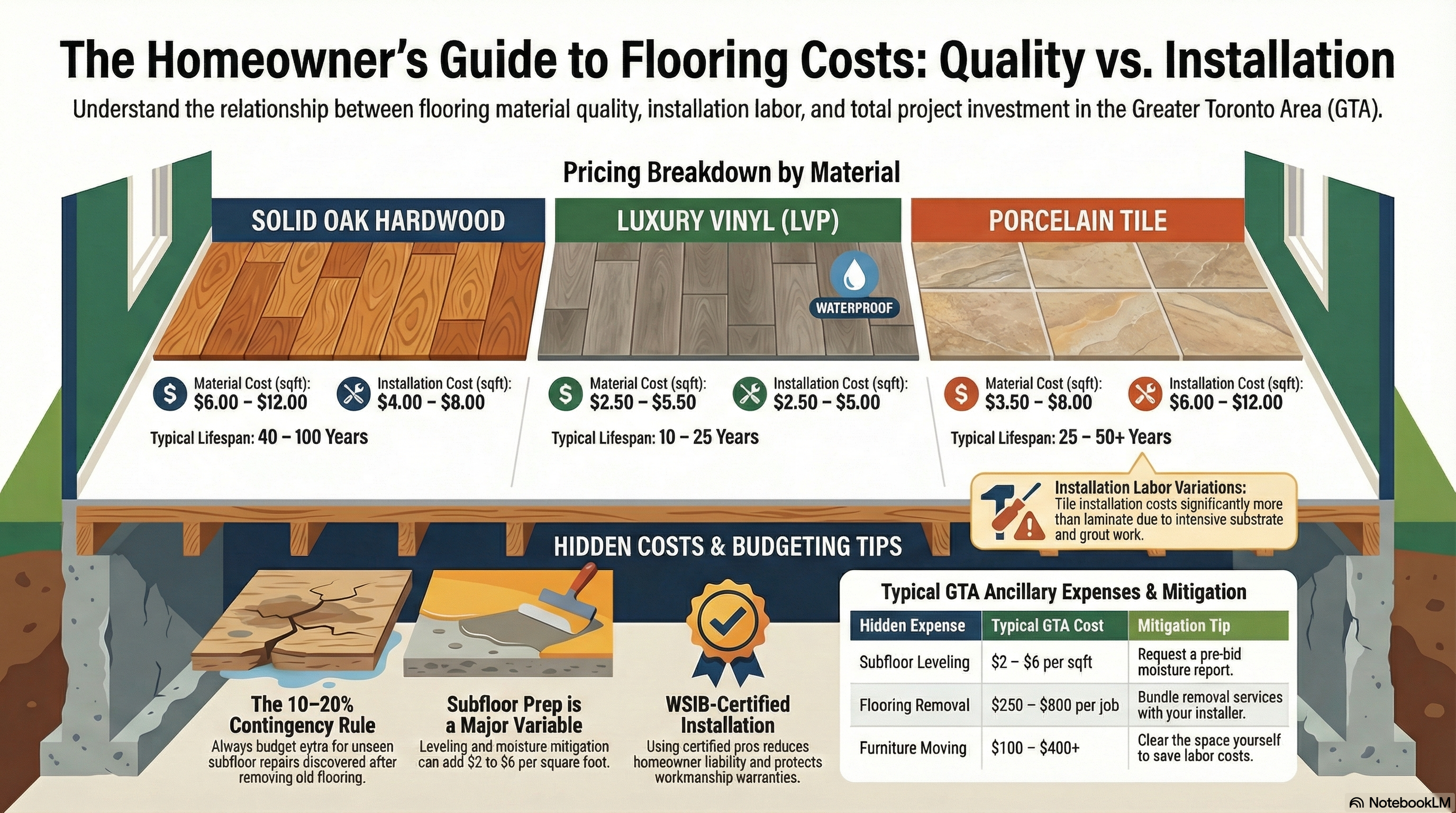
| Oak (solid) | $6.00–$12.00 | $4.00–$8.00 | 40–100 years with refinishing | Periodic refinishing, humidity control |
| Maple (solid) | $5.50–$10.00 | $4.00–$8.00 | 30–80 years with refinishing | Regular cleaning, avoid moisture |
| Engineered oak | $4.00–$9.00 | $3.50–$7.00 | 20–50 years depending on wear layer | Lower swelling, suitable for basements |
This table shows typical local bands; installation on stairs or complex patterns increases labor, and acclimation or specialty finishes add cost. When comparing quotes, ask providers for material wear-layer details and installation method because those attributes strongly affect both price and lifespan.
Local price ranges and what to expect from providers: in Vaughan and the GTA, providers commonly quote per-square-foot installed prices and itemize extras like stair work and stair rail finishing. DK FLOORING EXPERT lists WSIB-certified installers, free estimates, and financing options as practical value adds that can make professional installation more predictable for homeowners seeking local trust signals.
What Are the Material and Installation Price Ranges for Hardwood Flooring?
Material and installation price ranges depend on species, plank width, finish type, and the complexity of the install; a simple room with clear substrate costs less than staircases or patterned layouts. Typical material-only ranges for hardwood and engineered boards vary from budget engineered (“good” grade) pricing to premium solid hardwood, while installation labor often depends on subfloor prep and the chosen fastening method. Example scenarios: a 200 sqft living room with minor prep might sit near the low end of installed ranges, whereas a multi-room renovation with stair treads and transitions increases both labor and time.
Understanding these scenario differences helps you compare quotes by project scope rather than just headline per-square-foot numbers, and it prepares you to ask suppliers the right questions about wear-layer and finish warranties.
Why Choose WSIB Certified Installers for Hardwood Flooring?
WSIB-certified installers demonstrate compliance with local workplace safety and insurance standards, which both reduces homeowner liability and often reflects a higher level of professional accountability. Certification typically aligns with better documentation, standardized practices for subfloor prep and moisture mitigation, and clearer workmanship warranties, and while certified teams may bill higher hourly rates, their adherence to safety and quality standards reduces the risk of costly rework. Choosing certified installers can also influence insurance claims handling and resale confidence, making the slightly higher upfront cost a risk-managed investment.
Given these benefits, many homeowners find certified installation a worthwhile adjustment to project budgets, especially when planning value-preserving materials like hardwood.
What Are the Typical Prices for Vinyl Plank and Tile Flooring Installation in GTA?
Luxury vinyl plank (LVP), luxury vinyl tile (LVT), and ceramic/porcelain tile differ in material price, installation method, and durability; typical GTA ranges reflect these distinctions and local labor requirements. LVP/LVT often provide waterproof performance at a lower installed cost and faster install time, while tile installation involves more labor for substrate prep, mortar, grout, and potential sealing. The table below provides a compact comparison of material vs. installation costs and expected lifespans for vinyl and tile options to assist rapid decisions.
| Material | Typical Material Cost (per sqft) | Typical Installation Cost (per sqft) | Durability / Lifespan | Maintenance Notes |
|---|---|---|---|---|
| LVP (click) | $2.50–$5.50 | $2.50–$5.00 | 10–25 years | Low maintenance, waterproof |
| LVT (glue or loose-lay) | $3.00–$6.00 | $3.00–$6.50 | 10–30 years | Requires proper adhesive / moisture control |
| Porcelain tile | $3.50–$8.00 | $6.00–$12.00 | 25–50+ years | Grout sealing recommended |
Comparing LVP/LVT and tile, vinyl installs are typically faster with fewer substrate demands, while tile demands flat, stable substrates and more time-consuming labor. This cost-performance trade-off is important when evaluating room usage and moisture exposure.
Local price ranges & what to expect from providers: in the GTA, many providers offer same-day delivery and itemized quotes for LVP installs, while tile jobs commonly require moisture testing and longer cure times. DK FLOORING EXPERT’s inventory breadth and options like 0 percent interest financing and free estimates align with these purchasing choices for customers balancing cost and durability.
How Do Luxury Vinyl Plank and Tile Compare in Cost and Durability?
Luxury vinyl plank typically costs less to buy and install per square foot than ceramic or porcelain tile, and it offers superior waterproofing for basements or bathrooms compared with many traditional tiles. Vinyl products with thicker wear layers are more durable in high-traffic zones, while tile provides superior longevity and heat resistance for areas like kitchens. Installation complexity is higher for tile due to substrate leveling and grout work, making tile installations slower and often costlier in labor.
Choosing between vinyl and tile should be driven by room conditions and desired lifespan: vinyl for fast installs and moisture-prone spaces, tile for long-term durability and design flexibility.
What Hidden Costs Should You Expect During Vinyl Flooring Installation?
Vinyl installs can reveal hidden costs such as floor leveling, transition pieces, adhesive or underlayment upgrades, waste overage for pattern matching, and disposal of old flooring. These line items often appear once installers assess the substrate during site visits, so initial estimates can increase when concealed issues emerge. Mitigation strategies include requesting a detailed, itemized estimate, budgeting a contingency for unseen repairs, and confirming whether services like transitions and trim are included in the quoted rate.
Being prepared for these typical add-ons helps prevent budget shock and ensures expectation alignment between homeowner and installer.
How Do Laminate and Engineered Flooring Prices Compare Across GTA?
Laminate and engineered flooring offer different value propositions: laminate often delivers lower upfront costs with decent scratch resistance, while engineered flooring shares many aesthetics of hardwood with better moisture resistance and refinishability depending on wear-layer thickness. Regional pricing across the GTA reflects material grade, core construction, and installation method, and installation labor varies by the complexity of transitions, underlayment needs, and subfloor condition. The table below summarizes typical price bands and lifecycle considerations to help choose between the two options.
| Material | Typical Material Cost (per sqft) | Typical Installation Cost (per sqft) | Durability / Lifespan | Maintenance Notes |
|---|---|---|---|---|
| Laminate | $1.50–$4.00 | $2.00–$4.00 | 10–25 years | Sensitive to standing moisture, easy to clean |
| Engineered (thin wear layer) | $3.00–$6.00 | $3.50–$7.00 | 15–30 years | Can be refinished if wear layer adequate |
| Engineered (thick wear layer) | $5.00–$10.00 | $4.00–$8.00 | 20–50 years | Best balance of hardwood look and moisture tolerance |
Local providers in Vaughan often price laminate competitively as a budget option, while engineered floors sit mid-to-premium depending on wear-layer thickness. DK FLOORING EXPERT’s product mix—covering laminate and multiple engineered options—can match those preferences and includes warranty and financing options to spread cost.
What Factors Affect Laminate Flooring Prices in Canada?
Laminate price drivers include plank thickness, AC durability rating, locking system quality, brand reputation, and decorative layer realism; higher AC ratings and thicker boards typically cost more but withstand heavier traffic. Manufacturing origin and supply-chain dynamics also influence price volatility, and underlayment or moisture barriers required for some installations add to total cost. Assessing AC rating alongside installation needs helps determine whether laminate is suitable for a specific zone in your home. For more information, visit our laminate flooring category.
These material attributes lead directly into installation choices for engineered flooring, which impact labor and final cost.
How Does Engineered Flooring Installation Influence Overall Costs?
Engineered flooring installation costs vary by method—floating, glue-down, or nail-down—each with different labor intensity and subfloor requirements. Floating installs are usually faster and less costly, glue-down offers superior stability for certain substrates, and nail-down is traditional for robust, long-lasting results on appropriate subfloors. Subfloor leveling, moisture mitigation, and acclimation times add to project duration and cost, and the chosen installation technique affects long-term repairability and sound performance. For more information about engineered wood flooring, check out our blog.
Selecting the right installation method for engineered boards is essential to achieving the expected lifespan and avoiding premature issues.
What Are the Cost Considerations for Carpet and Tile Flooring Installation in GTA?
Carpet and tile present distinct upfront and operational costs: carpet combines material, pad, and labor with periodic replacement, while tile requires higher upfront labor for substrate prep and grouting but offers long-term durability. Cost considerations include pile type, padding quality, adhesive or underlayment for tile, and sealant for natural stone; each of these choices shifts both initial budget and maintenance obligations. The comparative table below provides a concise view to inform budgeting decisions for rooms across the GTA.
| Flooring Type | Typical Material Cost (per sqft) | Typical Installation Cost (per sqft) | Durability / Lifespan | Maintenance Notes |
|---|---|---|---|---|
| Carpet (basic) | $1.50–$3.50 | $1.50–$3.00 | 5–15 years | Vacuum regularly, replace padding periodically |
| Carpet (premium) | $3.50–$7.00 | $2.00–$4.00 | 10–20 years | Higher durability with stain-resistant treatments |
| Ceramic tile | $2.50–$6.00 | $4.00–$9.00 | 25–50 years | Grout sealing recommended |
| Stone tile | $5.00–$15.00 | $8.00–$20.00 | 30+ years | Requires sealing and careful substrate prep |
Local installers in the GTA may bundle padding and basic transitions for carpet jobs while tile installations commonly include substrate testing; ask for detailed line items to compare offers. DK FLOORING EXPERT’s product range includes carpet and tile options with financing and warranty details to help customers make informed purchases.
How Do Carpet Material and Labor Costs Vary in the GTA?
Carpet costs vary by fiber (nylon, polyester, wool), pile height, and density, plus the quality of the padding used; premium fibers and dense construction increase material cost but improve longevity and comfort. Labor costs depend on room complexity, number of seams, stairs, and stair nosing—stair carpeting adds a measurable premium per step. Additional services like removal of old carpet, disposal, and furniture moving also influence final invoices.
Evaluating total installed cost requires accounting for pad quality and stair work when comparing contractor quotes.
What Are the Price Ranges for Ceramic, Porcelain, and Stone Tile Installation?
Tile price bands reflect material type and installation difficulty: ceramic tends to be less expensive than porcelain, while natural stone demands premium material and skilled labor for cutting and sealing. Installation costs rise with pattern complexity, tile size, and required substrate leveling; large-format tiles often need more precise prep and may increase labor hours. Grout type and sealant for stone add to material lines as well. flooring benefits
Understanding these tile-specific variables helps estimate realistic installed costs and select appropriate tile types for target rooms.
How Can You Minimize Flooring Costs: DIY vs. Professional Installation?
Deciding between DIY and professional installation involves weighing immediate savings against long-term risks, warranty considerations, and time investment; the choice depends on your skill level, project complexity, and appetite for appetite for risk. A structured comparison clarifies typical savings, the common cost of mistakes, and when professional services provide economic value through speed, warranty, and reduced rework. The short decision checklist below helps homeowners choose the right path for their circumstances.
Considerations when choosing DIY or pro:
- Project size and complexity: Small, simple floating floors may be DIY-friendly, complex patterns or stairs require pros.
- Time and skill: DIY takes longer and has a steeper learning curve; professional crews complete installs faster.
- Warranty and resale: Professional installation preserves workmanship warranties and often benefits resale value.
| Approach | Typical Savings/Costs | Risk Factors | When to choose this option |
|---|---|---|---|
| DIY | Save 30–50% on labor but risk mistakes | Incorrect acclimation, poor seam work | Small rooms, basic floating floors, confident DIYers |
| Professional | Pay full labor; includes warranty and risk mitigation | Higher upfront cost | Complex layouts, moisture-prone areas, stairs |
| Hybrid (pro for prep, DIY for finish) | Balanced cost with reduced risk | Coordination required | Moderate complexity projects with some DIY skills |
After weighing these factors, many homeowners find professionals offer long-term cost control through correct subfloor prep and warranty-backed work. For those in the GTA seeking professional options, DK FLOORING EXPERT provides WSIB-certified installers, free estimates, and financing choices that can make professional installation more affordable and predictable.
What Are the Pros and Cons of DIY Flooring Installation?
DIY flooring can reduce immediate labor expense and provide personal satisfaction, but it carries risks including improper substrate preparation, voided product warranties, and time consumption that may outweigh savings. Common DIY pitfalls include inadequate acclimation of wood products, incorrect underlayment for moisture-prone areas, and imperfect transitions that require costly rework. For straightforward floating floors in small rooms, DIY may be cost-effective; however, for moisture-prone basements, stairs, or large open-plan spaces, professional expertise often prevents expensive mistakes.
Recognizing these trade-offs is essential before committing to a DIY path, and the next section explains why professionals can deliver better long-term value.
Why Is Professional Installation Worth the Investment?
Professional installers provide accurate moisture testing, proper subfloor remediation, correct adhesive selection, and finish-quality transitions—all of which reduce the likelihood of premature failure and expensive callbacks. Workmanship warranties, WSIB compliance, and insurance coverage further protect homeowners from on-site incidents and installation defects, and professionals often complete complex tasks far faster than DIYers. While professional rates increase upfront cost, the reduced rework and improved longevity of the finished floor frequently justify the investment when evaluated on a lifecycle basis.
Choosing a reputable installer therefore becomes an investment in performance and peace of mind, especially for higher-value materials or commercial projects.
What Financing and Warranty Options Are Available for Flooring Projects in Vaughan?
Financing and warranty options influence how buyers manage upfront costs and long-term value; understanding common terms around 0 percent interest financing and typical warranty coverages helps structure projects within budget constraints. Many local providers in the GTA offer financing plans that spread payments, and manufacturer warranties differ from installer workmanship warranties in scope and duration. Below is an overview of how these financial and warranty instruments operate and what to watch for in the small-print.
Financing basics and warranty expectations include:
- 0 percent interest offers: These reduce short-term cash burden but may have term limits or eligibility criteria.
- Manufacturer vs. installer warranties: Product warranties cover material defects; workmanship warranties cover installation issues.
- Transferability and exclusions: Verify whether warranties transfer to new owners and whether moisture or misuse voids coverage.
Understanding these aspects prepares buyers for negotiations and final contract terms.
How Does 0 Percent Interest Financing Work for Flooring Purchases?
0 percent interest financing spreads the purchase price into fixed monthly payments without additional interest during the promotional period; common caveats include a required credit check, specific term lengths, and potential deferred interest clauses that apply if payments are missed. This option improves cashflow and enables higher-quality choices without immediate large outlays, but buyers should confirm whether fees, late payment penalties, or short promotional windows apply. Using financing can be sensible when the financed purchase produces long-term value and the payment plan matches household cashflow.
When comparing quotes, include financing costs and terms in total project considerations to ensure the arrangement truly reduces financial strain.
What Warranty Coverage Should You Expect on Flooring and Installation?
Expect manufacturer warranties to cover material defects such as wear-layer failure or delamination, while installer workmanship warranties address improper installation, gaps, or poor transitions; durations vary widely by product and installer. Carefully review exclusions for moisture damage, improper maintenance, or pet-related wear, and request warranty terms in writing before signing contracts. Some providers offer combined product-plus-workmanship packages or extended warranties for an additional fee; these can provide coverage continuity and simplify claims handling.
Clear warranty documentation and understanding transferability increase the long-term protection of your flooring investment.
What Are the Hidden and Additional Costs to Anticipate in Flooring Projects?
Hidden and additional costs frequently surprise homeowners and can materially inflate budgets; common line items include subfloor repair, removal and disposal of old flooring, furniture moving, transition strips, trim replacement, and specialized surface treatments. Anticipating these items and budgeting a contingency (commonly 10–20%) helps avoid project delays and sticker shock. The table below clarifies typical hidden costs, when they occur, typical GTA ranges, and mitigation tips to keep budgets under control.
| Hidden Cost | When it occurs | Typical Cost Range (GTA) | Mitigation Tip |
|---|---|---|---|
| Subfloor leveling | After demolition and inspection | $2–$6 per sqft | Request pre-bid moisture and level report |
| Old flooring removal & disposal | During demo phase | $250–$800 per job | Bundle removal with installer quote |
| Furniture moving | Pre-installation | $100–$400 depending on volume | Schedule self-move or bundled service |
| Transition pieces & trim | During finishing | $50–$300 per lineal | Ask for itemized transition pricing |
Being aware of these expenses allows more accurate budgeting and informed vendor comparisons, and the following list highlights the most common add-ons to ask about before starting work.
- Removal and disposal fees for existing flooring.
- Subfloor repairs and moisture mitigation treatments.
- Additional trim, thresholds, and stair nosing costs.
Proactively requesting an itemized estimate and scheduling a site assessment reduces the chance of surprises and helps you allocate contingency funds appropriately.
How Do Subfloor Preparation and Repairs Affect Total Flooring Costs?
Subfloor issues such as rot, unevenness, or moisture intrusion can require localized leveling, plywood replacement, or full subfloor replacement; costs vary by scope and often dominate final invoices. Effective mitigation includes pre-installation moisture testing, inspecting joists and understructures for damage, and selecting suitable underlayments to address minor unevenness. Early detection through a site assessment prevents mid-project scope changes and allows homeowners to compare remediation quotes rather than accept surprise charges.
A focused subfloor inspection early in the planning phase therefore reduces risk and supports accurate budgeting for the full install.
What Other Expenses Like Removal, Disposal, and Furniture Moving Should You Budget For?
Removal, disposal, and logistics tasks add predictable line items that vary by job size and local disposal fees; common ranges include flat removal fees per room, hourly furniture-moving charges, and additional fees for hazardous-material handling if encountered. Tips to lower these costs include bundling removal with installation, scheduling mid-week installs when crews are less busy, and consolidating purchases to reduce delivery surcharges. Requesting a fully itemized quote that separately lists removal, disposal, and moving charges helps you compare vendors on equal footing.
If you prefer professional help, DK FLOORING EXPERT provides free estimates, WSIB-certified installation teams, and financing options, which can make comprehensive packages—covering material selection, installation, and ancillary services—easier to manage for buyers in Vaughan and the broader GTA.
Life-Cycle Cost Analysis for Commercial Flooring Materials
The aim of this study is to develop an algorithm for life-cycle cost analysis (LCCA) and evaluate flooring materials for commercial applications. The results indicate that life-cycle economics is significant to the continued viability of the facility. Life-cycle cost analysis (LCCA): a comparison of commercial flooring, D Harris, 2017
Commercial Flooring: Installation, Preparation, and Long-Term Costs
Equipment costs have a significant impact on long-term cost of ownership. The floor category is broad, including linoleum, luxury vinyl tile, and carpet. The analysis includes costs for installation and preparation and initial cleaning. Life-cycle cost analysis (LCCA): a comparison of commercial flooring, D Harris, 2017